





Role change
Current role is Regular Member
*Which character do you want to upgrade?
*Reasons for upgrading


History of Communication
Development
Smart Mac Remastered Returns
HyFis leads microphone wireless HiFi


Physical body
Humans initially communicated face-to-face, and even today, many important matters are still require in-person exchanges. This involves transporting physical bodies to convey information. The ultimate form was the “Eight hundred li urgent dispatch”. Today, 95% of human transportation involves transporting people to a certain location for information exchange.

Sound
By 3000 BC, communication via horn signaling had been developed, transmitting information at a speed of 343 meters per second. This was significantly much faster than the physical bodies delivery system, and speed was crucial for critical military intelligence.

Light
During the Spring and Autumn Period and the Warring States Period, light communication appeared. Whether it was beacon fires or lighthouse lights, they all used the speed of light, which is 300,000 kilometers per second, to transmit sparse information, which was much faster than the speed of sound in air.
 Watch the video
 Read blog posts
Visual Telegraph
After the French Revolution in 1793, France was surrounded by enemies and urgently needed real-time intelligence on its borders. Claude Chappe invented a visual communication system, called “The Chappe semaphore visual telegraph”, which relied on the arrangement and direction of three wooden poles spaced 10 miles apart on rooftops to achieve rapid message transmission. These three poles could achieve up to 256 states, equivalent to one byte of information. At its peak, the system achieved a visual communication network spanning thousands of miles, with an information density far exceeding that of traditional beacon fires.

Electric Telegraph
Visual telegraph rely on the human eyesight and manual operation, which imposed limitations on repetition, reliability and timeliness. In 1837, Samuel Morse invented the electric telegraph, bringing an to the era of visual telegraph and enabling the transmission of human information at the speed of electromagnetic waves through wires. Morse code is still in use today.
 Watch the video
 Read blog posts
Telephone
In 1860, Antonio Meucci invented the prototype of the telephone. In 1876,Alexander Graham Bell applied for the telephone patent, and founded the Bell Telephone Company (the predecessor of AT&T). Humanity entered the era of voice communication, the most natural form of human interaction.
 Watch the video
 Read blog posts
Landline telephone
Following the telephone's invention, the world swiftly entered the PSTN era—the Public Switched Telephone Network. Take the simplest star connection as an example: if there are N telephones, a total of N*(N-1)/2 lines are needed for direct interconnection between every two telephones; whereas only N lines are required for star switching. The PSTN networks is still in widespread use today.
 Watch the video
 Read blog posts
Mobile phone
Landline telephones inevitably constrained human mobility. In 1957, Soviet engineer Leonid Kupriyanovich invented the LC-1 Portable Telephone. In 1973, Motorola engineer Martin Cooper developed the first commercial mobile phone, ushering humanity into the mobile phone era.
 Watch the video
 Read blog posts
PC interconnection
Fixed-line communication era / PC interconnection era / First-generation Internet: In 1969, ARPANET connected four university nodes in the United States, It was the world's first packet-switched network. By 1980, the world entered the PC interconnection era, which continues today with annual PC shipments reaching 300 million units. PC interconnection fundamentally enables network activities within a fixed space—including gaming, web browsing, music streaming, search, email, and more. This shift transformed humanity from passively receiving information via television, radio, and newspapers to actively accessing information on demand.
 Watch the video
 Read blog posts
Mobile interconnection
Just as landline telephones evolved into mobile phones, the fixed-line era inevitably progressed toward mobile internet connectivity—for freedom of movement is inherent to human nature. In 2007, Apple redefined the mobile phone, prompting the world to rapidly abandon traditional feature phones. By 2010, the global mobile internet era commenced, centered around 3 billion annual shipments of smart mobile devices. These devices support richer mobile applications than the fixed-line era—including navigation, gaming, shopping, instant messaging, conferencing, music, and LBS services.
 Watch the video
 Read blog posts
Sensory interconnection
Mobile internet, which revolves around smartphones and does not align with human natural experiences, will see its next breakthrough in the era of natural sensory connectivity (Metaverse Phase 1 / Third-Generation Internet). In this era, human senses and related nodes will be connected to communication hosts and cloud-based super applications via sensory micro-terminals (relying on wireless short-range chips meeting specific technical requirements), achieving ultra-immersive experiences to replace 95% of mobile physical information interaction.
HyFis SoC chip has pioneered the ultimate in acoustic sensory connectivity (24kHz full-bandwidth, 720°Panoramic Sound Pickup, Millisecond-Level Ultra-Low Latency) and will expand to the full spectrum.
 Watch the video
 Read blog posts
Sensory Internet
The first stage of the metaverse is based on the enhancement of our sensory experiences through our eyes, ears, mouth, nose, tongue, and body. This stage is referred to as the AR metaverse, or the sensory internet.






Acoustic Metaverse
The core of sensory interconnection. Among all human senses, only “acoustics” possesses a complete closed
loop of “perception + free expression,” making it the core of the sensory internet.

Human Brain Acoustic Closed Loop
The core of sensory interconnection. Among all human senses, only “acoustics” possesses a complete closed loop of “perception + free expression,” making it the core of the sensory internet.
Ear → Auditory Cortex
Receives sound and locates its source
Wernicke's Area
Responsible for semantic comprehension; damage causes inability to understand speech
Broca's Area
Responsible for organizing language; damage causes inability to express speech
Motor Nerves
Express language through vocal organs
Brain-computer interface
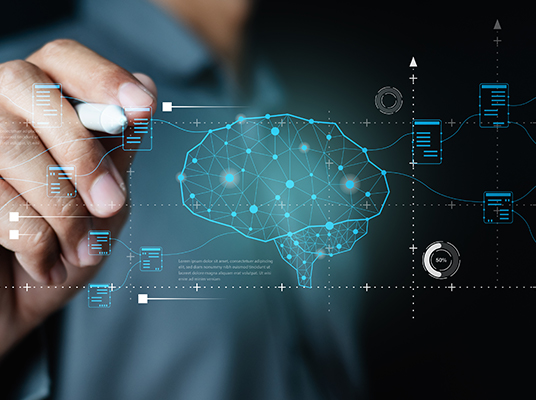
The second stage of the metaverse: brain-computer interface, is a natural extension of the sensory interconnection of the first stage AR metaverse/ sensory connectivity. This is because the first stage always relies on the human body's senses to convey information from multiple dimensions of the universe to the brain. Through neuroscience research, we have discovered that the brain's perception of external information follows a similar process across all senses at the neural level. Neural stimulation triggers a depolarization of the membrane voltage on the surface of the neurons associated with that sense from -70 millivolts to 0, then to +40 millivolts, followed by repolarization and hyperpolarization, and finally returning to -70 millivolts. The amplitude of this pulse process is constant, and the interval is constrained by the energy of human adenosine triphosphate (ATP), resulting in a 1-millisecond refractory period. Therefore, the human nervous system can be regarded as a special digital discrete system. Given this, it is reasonable to infer that the second phase of the metaverse will bypass the intermediate processes of the physical body's various senses and directly connect the essential information of the universe with the brain's nervous system. This is essentially an evolution from the first stage's enhanced sensory experience to a direct brain-computer interface that transcends sensory boundaries.
 Watch the video
 Read blog posts
Cloud Brain
Phase Three of the Metaverse: Cloud Brain. Direct interconnection between cosmic information and the brain will inevitably lead to information overload. Although the brain has a large capacity and its 100 billion neural networks are highly sophisticated, the bandwidth of human brain processing is only 10 bps. Therefore, the next step after information overload is to seek the complete cloudification of sensory memory, working memory, and long-term memory, as well as the complete cloudification of the trillion neural weight coefficients in the human brain. When all of a person's past memories are moved to the cloud, and their trillion-neuron weight coefficients are also moved to the cloud, their personality traits are also established in the cloud. This cloud-based brain can continue to explore the universe, revisit old friends, and interact with descendants thousands of years in the future through technological senses, thereby achieving immortality.
 Watch the video
 Read blog posts
Ultimate Form
Mathematically, it can be proven that when any two cloud-based brains (or two souls) have asymmetric information ∑pi*log(pi) on any topic, they can reach consensus in any short period of time (meaning that the communication rate between two cloud-based brains can reach or even far exceed Tbps, far surpassing the human body's thinking rate of 10bps). these two souls become part of a larger soul. Ultimately, all souls are interconnected at high speed, forming the ultimate ruler of the universe.
 Watch the video
 Read blog posts
Join Acousbit and create the future of the
acoustic metaverse together.

Dr. Zhang Deming
Founder/Chairman/Chief Scientist
Over 20 years of experience in acoustic audio communication
Profound Academic Background & Industry Expertise:
Bachelor of Physics from Peking University, Ph.D. in Acoustics from the Chinese Academy of Sciences, with over 20 years of experience in acoustic audio and communication technologies.
Industry Leader:
Zhongguancun High-End Leading Talent, Chief Scientist of StarFlash Audio, highly respected in the industry.
Technical Visionary:
Chief Designer of HyFis technology, leading the company’s technology roadmap and securing its undisputed technological leadership.
Role change
Current role is Regular Member

